Home › Country of Origin Meaning › Product of New Zealand
Understanding origin
Product of New Zealand: What NZ Makes, Grows and Exports
By Buy NZ Made · Reviewed 16 November 2026
Product of New Zealand, Made in New Zealand, Grown in New Zealand and Packed in New Zealand all mean different things. Here is what New Zealand is known for producing, what each label tells you, what the law says about origin claims and how to check a product yourself.
For shoppers reading labels, visitors curious about what New Zealand makes, and businesses getting their own labels right.
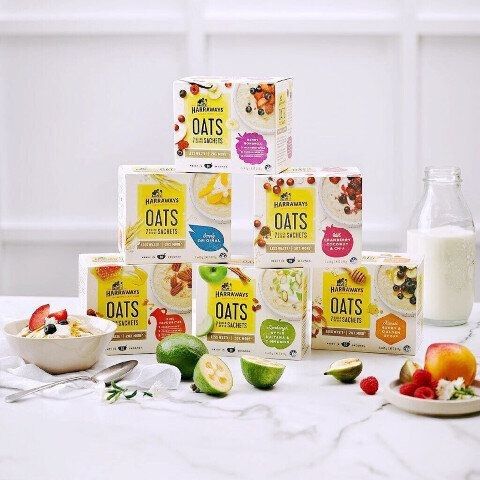
Harraways oats, milled in Dunedin since 1867 and featured on our blog.
In this guide
What New Zealand is known for producing
Product of, Made in or Packed in New Zealand?
What the law says about origin claims
How to check a label
Find NZ made products
More guides to read next
Your questions
What New Zealand is known for producing
New Zealand is a small country with a big farming and food sector, and a manufacturing base that is more varied than many people expect. Here is a plain-English picture of what products are made in New Zealand:
Products New Zealand is known for
Group | Examples |
|---|---|
Dairy | Milk powder, butter, cheese and infant formula. Dairy is the country's biggest goods export |
Meat and seafood | Lamb, beef, venison and seafood |
Fruit and horticulture | Kiwifruit, apples, avocados and wine, especially Sauvignon Blanc |
Honey | Including mānuka honey |
Wool and fibre | Strong wool for carpets and textiles, fine merino for clothing, possum-merino blends |
Forestry and timber | Logs, sawn timber, plywood and wood products |
Manufactured goods | Machinery, boats, food and drink, furniture, clothing, building products, technology and much more |
A lot of New Zealand produce is exported raw or lightly processed. Some of it, like New Zealand merino, comes back as finished goods made somewhere else. That is why labels matter.
This guide is part of our wider guide to country of origin meaning, which explains how origin works when products are made across several countries.
A long-running example from our blog
Harraways was established in Dunedin in 1867. When we spoke to them in December 2020, they told us they still mill oats on the original site at Green Island, working closely with farmers. Oats grown and milled here are a clear case of a product of New Zealand.
Product of, Made in or Packed in New Zealand?
These phrases sound similar but describe different things. Read the exact words on the made in New Zealand label:
Common origin labels and what they tell you
Label says | What it usually tells you | Watch for |
|---|---|---|
Product of New Zealand | The product, and usually its main ingredients, comes from New Zealand | Read the rest of the label for ingredient origins |
Made in New Zealand | The product was transformed here so that its essential character came into being here | Imported ingredients or parts are allowed; simple assembly is not enough |
Grown in New Zealand | The produce or animal was grown or raised here | Common on fresh food and on our NZ Grown labels |
Made in New Zealand from local and imported ingredients | Made here, with some ingredients from overseas | An honest and common label for food |
Packed in New Zealand | The product was packed here | It may have been grown or made in another country |
Designed in New Zealand | Designed here | Usually made somewhere else |
Under our Code of Practice, a product is made in New Zealand when its essential characteristics come into being here. Clothing cut and sewn here from imported fabric can qualify. Orange juice made by adding water to imported concentrate and bottling it here does not.
What the law says about origin claims
Under the Fair Trading Act, any claim about where a product comes from must be accurate and must not give a misleading impression. The Commerce Commission enforces this. Its guidance makes a few points worth knowing:
Assembling imported parts is not enough to call a product New Zealand made.
The overall impression counts, not just the words. Kiwi birds, ferns, flags and New Zealand place names can imply a New Zealand origin that is not true.
A business must be able to back up an origin claim.
Some products also have specific origin labelling rules. Most new clothing and footwear must show where it was made, and certain fresh, frozen or thawed foods must show their country of origin. Our guide to country of origin labelling in NZ explains those rules.
How to check a label
Read the exact words. Made, grown, packed and designed describe different activities.
Look past the imagery. A kiwi, fern or flag is branding, not proof.
Look for the Kiwi trademark. It is licensed by Buy NZ Made to products that qualify under our Code of Practice. Our NZ Made logo guide explains it.
Check the product. Use our product check to confirm a product carrying the trademark is on a licence holder's list.
Do not rely on the barcode. A barcode prefix shows where the number was issued, not where the product was made. See barcodes and country of origin.
Ask the business. A maker who makes here will usually be happy to tell you how and where.
If you think an origin claim is misleading, you can report it to the Commerce Commission. If it involves the Kiwi trademark, let us know at info@buynz.org.nz.
Find NZ made products
Our category guides show what is made here and how to check it:
NZ made clothing, socks, boots and knitwear
Or browse every category in our guide to NZ made products, and look up any business on our licence-holder register by company name.
More guides to read next
Country of origin meaning: how origin works across several countries
Country of origin labelling NZ: the rules for clothing, footwear and food
Kiwi owned businesses: how to check a company is NZ owned
Your questions
What does Product of New Zealand mean?
That the product, and usually its main ingredients, comes from New Zealand. Read the rest of the label for ingredient origins, and look up the product on our product check if it carries the Kiwi trademark.
Is Made in New Zealand the same as Product of New Zealand?
Not quite. Made in New Zealand means the product was transformed here, even if some ingredients or parts were imported. Product of New Zealand usually means the product and its main ingredients come from here.
Does Packed in New Zealand mean it was made here?
No. Packed in New Zealand means it was packed here. It may have been grown or made in another country.
What products are made in New Zealand?
Food and drink, dairy, meat, wine, honey, wool and merino clothing, timber, furniture, machinery, boats, skincare and much more. Our category guides show what is made here and how to check it.
Check a product's origin
Look up any product carrying the Kiwi trademark with our product check, or browse our guides to products made in New Zealand.
Make or grow products in New Zealand?
Our Kiwi trademark licences cover products made or grown in New Zealand, so shoppers can see your origin at a glance. Business licences start at $299 + GST a year for businesses with up to five staff, plus a one-off $95 + GST registration, and cover the products on your product list.
About this guide
Buy NZ Made licenses the Kiwi trademark to New Zealand businesses and has run the Buy NZ Made campaign since 1988. This guide draws on our Code of Practice (the rules every licence holder agrees to), Commerce Commission guidance on origin claims and New Zealand's origin labelling rules.
Last reviewed 16 November 2026. Spotted something out of date? Email info@buynz.org.nz and we will check it.

