Home › NZ Made Products › NZ Made Boots
Footwear
NZ Made Boots: Work, Leather and Sheepskin Boots Made Here
By Buy NZ Made · Reviewed 16 November 2026
Looking for NZ made boots? Here is how to find work boots, leather boots and sheepskin boots made in New Zealand, how a boot is built, how to get the fit right and make boots last, and how to check that sheepskin boots with Kiwi imagery are really made here.
For tradies, farmers, walkers and anyone buying boots or sheepskin footwear to last.
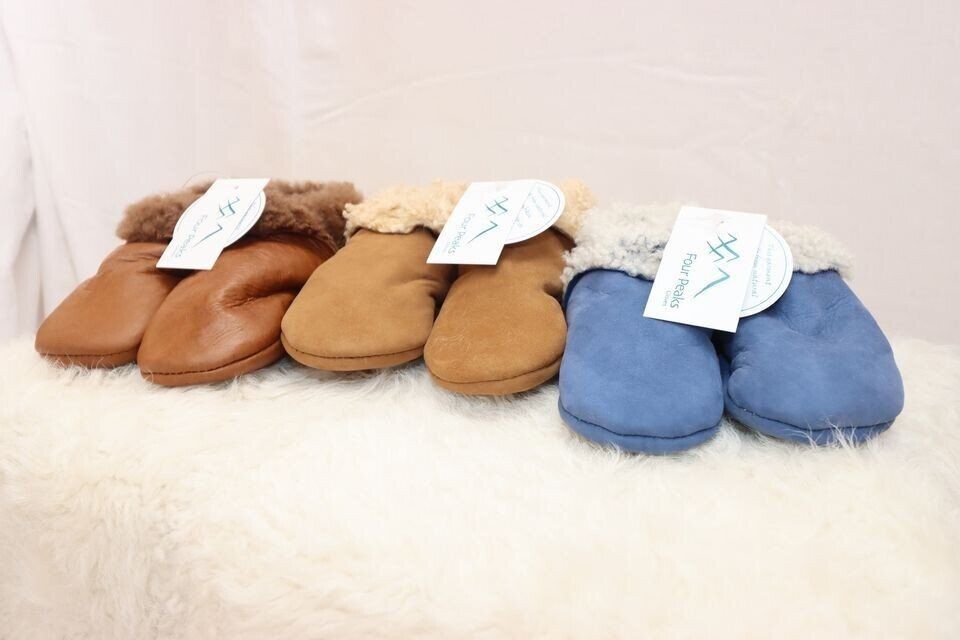
Sheepskin booties from Four Peaks Leather in Geraldine, featured on our blog.
In this guide
NZ boot makers
Where to buy NZ made boots
Work boots, leather boots and sheepskin boots
How a boot is built
Fit and sizing
Resoling and care
More guides to read next
Your questions
NZ boot makers
Most boots sold in New Zealand are imported, but footwear is still made here, from sheepskin boots and slippers to leather and work boots made by small workshops and established factories. Clothing and footwear sold here must carry a label showing where they were made, which makes the first check easy.
Start with footwear makers who hold a Kiwi trademark licence. Look for the Kiwi trademark on labels and makers' websites. You can look a business up on our licence-holder register by company name, and use the product check to confirm a style by brand or product name. This guide is part of our wider guide to NZ made products; see also NZ made shoes.
Sheepskin makers from our blog
Four Peaks Leather makes sheepskin booties, gloves and hats with a team in Geraldine and Timaru. When we spoke to owner Sally Houston in July 2024, she explained that keeping production local keeps her staff employed. Classic Sheepskins told us in August 2023 that it tans around 40,000 New Zealand sheepskins a year for products including slippers. Licences change over time, so check a maker's current listing on the register.
Where to buy NZ made boots
Direct from footwear and sheepskin makers, online or from factory shops
Workwear and farm supply stores: check the label for where the boots were made
Souvenir and gift shops for sheepskin boots: read the sewn-in label
Wherever you buy, look for the Kiwi trademark on the label or the maker's website, then check the product with our product check.
Work boots, leather boots and sheepskin boots
Boot types and what to check
Type | Good for | Check |
|---|---|---|
NZ made work boots | Building sites, farms and workshops | Safety toe if your job needs it, slip-resistant sole, ankle support and how it can be resoled |
NZ made leather boots | Everyday wear and town | Leather quality, construction and whether the sole is replaceable |
NZ made ugg boots and sheepskin boots | Warmth at home and around town | Real sheepskin (wool on the inside), where it was tanned and sewn, and a sturdy sole |
Gumboots | Wet ground, farms and gardens | Fit with thick socks; check the label for origin |
Sheepskin boots sold with Kiwi imagery
Sheepskin boots are a classic souvenir, and a lot of them are made overseas, sometimes from imported skins, and sold with kiwis, ferns or flags on the box. The Commerce Commission warns that kiwi or flag imagery can give a misleading impression of origin. Check the sewn-in label, ask where the skins were tanned and the boots sewn, and look the product up on our product check.
How a boot is built
Upper: the leather or sheepskin body of the boot. Full-grain leather is the most durable.
Stitched construction: in a welted boot, the upper is stitched to a strip of leather (the welt) that is stitched to the sole, which lets a cobbler replace the sole.
Cemented construction: the sole is glued on. It is lighter and cheaper but harder to resole.
Direct-injected soles: common on work boots; the sole is moulded onto the upper for a strong, waterproof bond.
Footbed: a removable insole lets you fit orthotics or replace a worn one.
Under our Code of Practice, a product is made in New Zealand when it is transformed here so that its essential character comes into being here. For a boot, that means it is cut, sewn and soled here, even if the leather or soles are imported. Assembling imported parts is not enough.
Fit and sizing
Try boots on late in the day, when feet are largest, wearing the socks you will use.
Leave about a thumb's width between your longest toe and the end of the boot.
Your heel should lift only slightly when you walk.
Sheepskin boots fit snugly at first and loosen as the wool compresses.
Check the size system. Some makers use New Zealand and Australian sizes, others European.
Wool socks make a big difference in boots. See our guide to NZ made socks.
Resoling and care
Clean off mud and grit after use, and dry boots naturally, away from heaters.
Condition leather boots regularly so the leather does not crack.
Brush sheepskin with a suede brush and spot clean; follow the maker's advice before washing.
Resole stitched boots before the wear reaches the welt. Many cobblers and some makers offer resoling.
Rotate pairs if you wear boots every day, so each pair can dry out.
More guides to read next
NZ made shoes: footwear made in New Zealand
NZ made socks: merino, possum and wool socks
Leather bags made in NZ: bags and leather goods
Your questions
Are ugg boots made in New Zealand?
Some sheepskin boots are made here, but many sold with Kiwi imagery are made overseas. Check the sewn-in label, ask where the skins were tanned and sewn, or check the product on our product check.
Can work boots be resoled?
Stitched (welted) boots can usually be resoled. Cemented and some direct-injected soles are harder or impossible to replace, so ask before you buy.
How should leather boots fit?
Snug at the heel with a thumb's width at the toe, tried on late in the day with the socks you will wear.
How do I clean sheepskin boots?
Brush them with a suede brush and spot clean marks. Follow the maker's care advice before washing them.
Find boots you can check
Look up a maker on our licence-holder register by company name before you buy.
Make footwear in New Zealand?
A Kiwi trademark licence lets you show buyers that your boots are made here, on boxes, swing tags and online. Business licences start at $299 + GST a year for businesses with up to five staff, plus a one-off $95 + GST registration, and cover the products on your product list.
About this guide
Buy NZ Made licenses the Kiwi trademark to New Zealand businesses and has run the Buy NZ Made campaign since 1988. This guide draws on our Code of Practice (the rules every licence holder agrees to), Commerce Commission guidance on origin claims, New Zealand's footwear origin labelling rules and our interviews with licence holders.
Last reviewed 16 November 2026. Spotted something out of date? Email info@buynz.org.nz and we will check it.

