Home › NZ Made Products › Leather Bags NZ
Leather and accessories
Leather Bags NZ: How to Find Leather Bags Made in New Zealand
By Buy NZ Made · Reviewed 16 November 2026
Looking for leather bags made in NZ? Here is how to find handbags, totes, satchels and backpacks made in New Zealand, what to ask about the leather and the stitching, how to care for a bag, and how to find leatherworkers who hold the Kiwi trademark licence.
For anyone buying a bag to last, as a gift or for work.
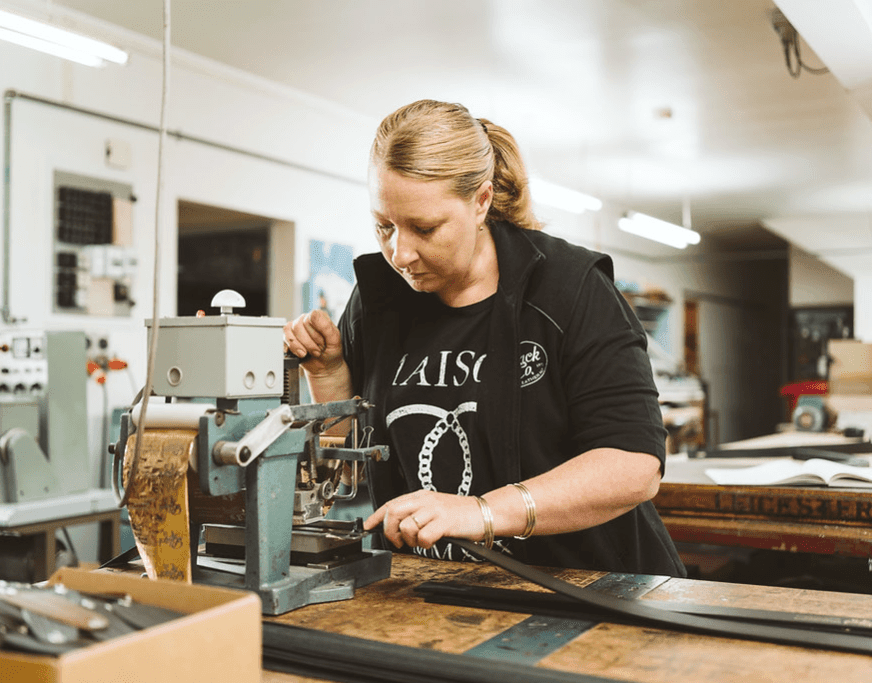
Working leather at Black & Co. Quality Leather in Ōtaki, featured on our blog.
In this guide
How to find NZ leather bag makers
Where to buy a leather bag made in NZ
Handbags, totes and backpacks
Leather: NZ or imported?
Stitching and hardware
Care and repairs
More guides to read next
Your questions
How to find NZ leather bag makers
New Zealand has leatherworkers making bags in small workshops and studios, often by hand and often to order. Many leather bags sold here are imported, including some with New Zealand branding. Asking the maker is the quickest way to know which is which.
Start with makers who hold a Kiwi trademark licence. Look for the Kiwi trademark on labels and makers' websites. You can look a business up on our licence-holder register by company name, and use the product check to confirm a bag by brand or product name. This guide is part of our wider guide to NZ made products.
Leatherworkers from our blog
Black & Co. Quality Leather has been making leather goods in Ōtaki since 1972. When we spoke to owners Leon and Melissa in April 2024, they described making work belts for farmers, plumbers and builders, along with custom projects such as knife sheaths and straps. Four Peaks Leather makes leather and wool goods, including gloves, hats and booties, in Geraldine and Timaru.
Neither is a bag maker, but both show what to look for: a named workshop, a town, and people who can tell you how each piece is made. Licences change over time, so check a maker's current listing on the register. Many workshops also welcome visitors, so you can see the bench before you buy.
Where to buy a leather bag made in NZ
Leatherworkers' workshops and websites, often with custom options
Craft markets and design stores
Department and fashion stores: check the label, as many of the bags they sell are imported
Wherever you buy, look for the Kiwi trademark on the label or the maker's website, then check the product with our product check.
Handbags, totes and backpacks
Bag styles and what to check
Style | Good for | Check |
|---|---|---|
NZ made handbags | Everyday essentials | Strap drop, closure and internal pockets |
Totes | Shopping, work and the beach | Handle attachment and whether the base is reinforced |
Satchels and messenger bags | Laptops and documents | Laptop size, padding and the strap's comfort |
NZ made backpacks | Commuting and travel | Shoulder strap padding, weight empty and weather resistance |
Wallets and small goods | Gifts | Card slots, stitching and edge finish |
Ask a maker whether they make to order. Many will change the size, colour, strap length or hardware, or add initials.
NZ made bags in other materials
Not every bag made here is leather. Local makers also use waxed canvas, wool, recycled sailcloth and plant-based materials. The same origin checks apply.
Leather: NZ or imported?
New Zealand produces hides from its farming industry, but much leather is tanned overseas, and many makers here buy in finished leather. That is normal, and it does not stop a bag being made here.
Under our Code of Practice, a product is made in New Zealand when it is transformed here so that its essential character comes into being here. For a bag, that means it is cut, stitched, edged and finished here. The Commerce Commission is clear that assembling imported parts is not enough to call something New Zealand made, and that kiwi or flag imagery can mislead.
Full-grain leather keeps the natural surface and ages into a patina.
Top-grain leather is sanded and finished for a more even look.
Vegetable-tanned leather is tanned with plant extracts, firmer at first and darkens with age.
Chrome-tanned leather is softer and more water resistant.
Ask the maker: where is the bag cut and sewn, where does the leather come from, and is this bag on your Kiwi trademark product list?
Stitching and hardware
Stitching: hand saddle-stitching is very strong because each stitch locks; machine lockstitch is neat and fast. Look for tight, even stitches with no loose threads.
Edges: burnished or painted edges should be smooth and sealed, not fraying.
Stress points: handles and strap joins should be reinforced or riveted.
Hardware: solid brass or stainless buckles, rings and zips last longest.
Care and repairs
Wipe off dirt with a soft, damp cloth.
Condition the leather every few months with a product made for it, testing on a hidden patch first.
Let a wet bag dry naturally, away from heaters.
Store it stuffed with paper in a breathable bag, not plastic.
One practical advantage of buying from a local workshop is repairs. Many makers will restitch a seam, replace a strap or swap hardware on their own bags.
More guides to read next
NZ made boots: leather, work and sheepskin boots
NZ made jewellery: pounamu, silver and gold
NZ made gifts: ideas by recipient and occasion
Your questions
Are leather bags made in New Zealand?
Yes, by leatherworkers in workshops around the country, often to order. Many bags sold here are imported, so ask where the bag was cut and sewn or check it on our product check.
Does a NZ made bag have to use NZ leather?
No. Under our Code of Practice, what matters is that the bag is cut, stitched and finished here. Many makers buy in finished leather.
What is the strongest stitching for a leather bag?
Hand saddle-stitching is very strong because each stitch locks independently. Well-made machine stitching is also durable.
Can a leather bag be repaired?
Usually. Many local makers will restitch seams, replace straps and swap hardware, especially on bags they made.
Find a leather maker you can check
Look up a maker on our licence-holder register by company name before you buy.
Make leather goods in New Zealand?
A Kiwi trademark licence lets you show buyers that your bags and leather goods are made here, on tags, packaging and online. Business licences start at $299 + GST a year for businesses with up to five staff, plus a one-off $95 + GST registration, and cover the products on your product list.
About this guide
Buy NZ Made licenses the Kiwi trademark to New Zealand businesses and has run the Buy NZ Made campaign since 1988. This guide draws on our Code of Practice (the rules every licence holder agrees to), Commerce Commission guidance on origin claims, our interviews with licence holders and common leatherworking practice.
Last reviewed 16 November 2026. Spotted something out of date? Email info@buynz.org.nz and we will check it.

