Home › NZ Made Products › NZ Made Knives
Kitchen and outdoors
NZ Made Knives: Find a New Zealand Knifemaker
By Buy NZ Made · Reviewed 16 November 2026
Looking for NZ made knives? Here is how to find a New Zealand knifemaker for kitchen, hunting, fishing and outdoor knives, what to know about steel and handles, how to keep a blade sharp, and how to check a knife is made here.
For cooks, hunters, anglers and anyone buying a knife to last, or as a gift.
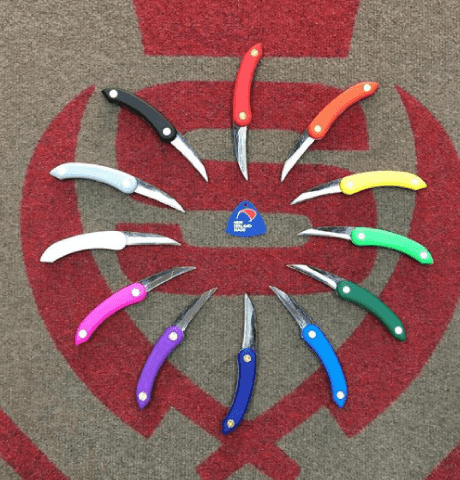
Knives from Svord, made in Waiuku and featured on our blog.
In this guide
New Zealand knifemakers
Where to buy NZ made knives
Kitchen, hunting and outdoor knives
Steel and handles
Custom knives
Sharpening and care
Imported knives sold under NZ names
More guides to read next
Your questions
New Zealand knifemakers
New Zealand has a small but serious knifemaking scene, from long-running workshops to custom makers forging a handful of blades a month. It also has imported knives sold under New Zealand-sounding names. The maker and the label tell you which is which.
Start with knifemakers who hold a Kiwi trademark licence. Look for the Kiwi trademark on labels and makers' websites. You can look a business up on our licence-holder register by company name, and use the product check to confirm a model by brand or product name. This guide is part of our wider guide to NZ made products.
A Waiuku knifemaker from our blog
Svord Knives was started by Bryan Baker in 1981 and makes knives in Waiuku. When we spoke to Svord in February 2021, the business described doing its own hardening and tempering, shaping blades by stock removal, and making sporting, chef and peasant knives. Licences change over time, so check a maker's current listing on the register before you buy.
Where to buy NZ made knives
Direct from knifemakers, online or at their workshop
Hunting, fishing and outdoor stores: ask which knives are made here
Kitchenware shops and markets, where you can hold a knife before buying
Wherever you buy, look for the Kiwi trademark on the label or the maker's website, then check the product with our product check.
Kitchen, hunting and outdoor knives
Common knife types and what they are for
Knife | Used for | Look for |
|---|---|---|
Chef's knife | Everyday slicing, dicing and chopping | A blade of about 20 cm and a comfortable, balanced handle |
Paring knife | Peeling and small, fine work | A short, sharp, easy-to-control blade |
Hunting knife | Skinning and butchering game | A fixed blade, a secure grip when wet, and a good sheath |
Filleting knife | Fish | A thin, flexible blade and a non-slip handle |
Outdoor or bush knife | Camp tasks, cutting cord and food | A sturdy fixed blade, corrosion resistance and a sheath |
Folding knife | Everyday carry for work and the outdoors | A reliable lock and easy cleaning |
Ask a maker which knife they would recommend for what you actually do. A good maker will often suggest fewer, better knives.
Steel and handles
Carbon steel takes a very keen edge and is easy to sharpen, but it rusts and stains if left wet. It develops a dark patina with use.
Stainless steel resists rust and suits fishing, hunting and busy kitchens. Edge-holding varies widely between steels.
Heat treatment (hardening and tempering) matters as much as the steel. Ask who does it, and how.
Handles: wood looks warm but needs oiling; synthetic handles such as polypropylene, G10 and Micarta are tough and grip well when wet; antler and bone are traditional for hunting knives.
The steel itself is usually imported, which is normal. Under our Code of Practice, a product is made in New Zealand when it is transformed here so that its essential character comes into being here. For a knife, that means the blade is shaped, heat treated, ground and fitted with its handle here.
Custom knives
Many New Zealand knifemakers make to order. You can usually choose the blade shape and length, the steel, the handle material and the sheath.
Describe how and where you will use the knife.
Ask to hold a similar knife, so you can feel the balance and handle size.
Agree the design, price and timing in writing.
Allow several weeks, and longer before Christmas, as custom makers often have a queue.
Sharpening and care
Hand wash and dry your knife straight away. Dishwashers dull edges and damage handles.
Use a wooden or plastic board, never glass, stone or a plate.
Hone regularly with a steel or ceramic rod to straighten the edge, and sharpen on a whetstone when honing no longer brings it back.
Keep a steady angle when sharpening. Ask the maker what angle the knife was ground at.
Store knives in a block, on a magnetic strip or in a sheath, not loose in a drawer.
Oil carbon steel blades and wooden handles from time to time.
Many makers will resharpen their own knives. Ask when you buy.
Carrying a knife in a public place without a reasonable excuse is an offence in New Zealand. Work, hunting and fishing are common reasons for carrying one. Transport knives safely, in a sheath and out of reach.
Imported knives sold under NZ names
A New Zealand brand name, a Māori word or a kiwi on the handle describes the branding, not where the knife was made. The Commerce Commission warns that this kind of imagery can give a misleading impression of origin, and that assembling imported parts is not enough to call a product New Zealand made.
Ask where the blade was ground and heat treated, and whether the knife is on the maker's Kiwi trademark product list.
More guides to read next
NZ made gifts: ideas by recipient and occasion
Leather goods made in NZ: bags, sheaths and leatherwork
NZ made food: food made in New Zealand
Your questions
Is carbon or stainless steel better for a kitchen knife?
Carbon steel takes a keen edge and is easy to sharpen but rusts if left wet. Stainless resists rust and is easier to look after. Both can be excellent if well heat treated.
How often should I sharpen a knife?
Hone it often, even every use, and sharpen it on a stone when honing no longer brings the edge back. That might be every few weeks or months, depending on use.
Can I order a custom knife in New Zealand?
Yes. Many local makers make to order. Expect to wait several weeks, and agree the design, price and timing first.
How do I know a knife was made in New Zealand?
Ask where the blade was ground and heat treated, and check the product on our product check. A New Zealand name on the handle is not proof.
Find a knifemaker you can check
Look up a maker on our licence-holder register by company name before you buy.
Make knives in New Zealand?
A Kiwi trademark licence lets you show buyers that your knives are made here, on the blade, packaging and online. Business licences start at $299 + GST a year for businesses with up to five staff, plus a one-off $95 + GST registration, and cover the products on your product list.
About this guide
Buy NZ Made licenses the Kiwi trademark to New Zealand businesses and has run the Buy NZ Made campaign since 1988. This guide draws on our Code of Practice (the rules every licence holder agrees to), Commerce Commission guidance on origin claims, our interviews with licence holders and common knife care practice.
Last reviewed 16 November 2026. Spotted something out of date? Email info@buynz.org.nz and we will check it.

