Home › NZ Made Products › Natural Soap NZ
Skincare and home
Natural Soap NZ: How to Choose Handmade Soap Made Here
By Buy NZ Made · Reviewed 16 November 2026
Looking for natural soap made in NZ? Here is how handmade soap is made, what natural on a soap label does and does not mean, what to look for if you have sensitive skin, and how to find soap makers who hold the Kiwi trademark licence.
For anyone choosing soap for their family, a gift or a hamper.
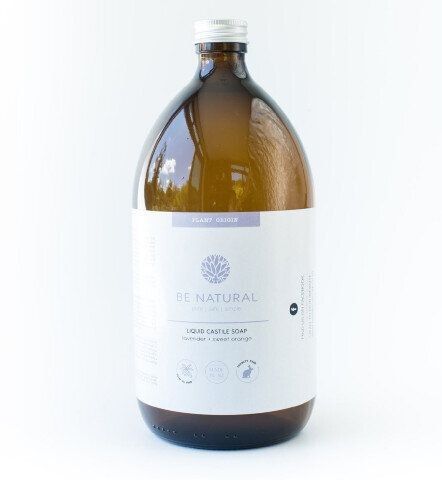
Liquid castile soap from Be Natural Soap in Inglewood, Taranaki, featured on our blog.
In this guide
NZ soap makers
Where to buy natural soap made in NZ
How handmade soap is made
What natural means on a soap label
Soap for sensitive skin
More guides to read next
Your questions
NZ soap makers
New Zealand has a busy community of soap makers, from home kitchens and market stalls to factories making bars for supermarkets. Plenty of soap sold here with a natural look and a New Zealand name is made overseas, so it pays to check.
Start with makers who hold a Kiwi trademark licence. Look for the Kiwi trademark on labels and makers' websites. You can look a business up on our licence-holder register by company name, and use the product check to confirm a product by brand or product name. This guide is part of our wider guide to NZ made products; for creams and balms, see NZ made skincare.
NZ made soap makers from our blog
Be Natural Soap is run by mother and daughter Susan and Sarah Lucas in Inglewood, Taranaki. When we spoke to them in March 2021, they described their soap as handmade, organic and palm oil-free, with solid bars and liquid castile soap.
Anihana, founded by Sophie Cooper, told us in July 2024 that it made the first shampoo and conditioner bars sold in New Zealand grocery stores. Hasan Aleppo Soap makes traditional Aleppo soap here using old-fashioned methods from the family's soap-making heritage in Syria, and sells at Auckland markets and online.
Licences change over time, so check a maker's current listing on the register. Many soap makers also sell at local markets, which is a good way to meet them and smell before you buy.
Where to buy natural soap made in NZ
Soap makers' websites, many with refills and gift packs
Farmers' markets and craft fairs
Pharmacies, gift shops and supermarkets: read the label for where it was made
Wherever you buy, look for the Kiwi trademark on the label or the maker's website, then check the product with our product check.
How handmade soap is made
Soap-making methods compared
Method | How it works | What it means for you |
|---|---|---|
Cold process | Oils and fats are mixed with lye (sodium hydroxide) and left to cure for several weeks | True soap made from scratch; glycerine stays in the bar |
Hot process | Like cold process, but heated to speed up the reaction | Rustic texture; ready sooner |
Melt and pour | A ready-made soap base is melted, coloured, scented and poured into moulds | The soap itself was made elsewhere; ask where the base came from |
Liquid soap and castile | Oils are made into soap with potassium hydroxide and diluted | Castile traditionally means soap made from olive oil |
No lye remains in a properly made and cured bar; it is used up in the reaction that turns oil into soap.
Under our Code of Practice, a product is made in New Zealand when it is transformed here so that its essential character comes into being here. For soap, the key step is turning oils into soap. The Commerce Commission is clear that minor processing or repackaging is not enough to call something New Zealand made.
What natural means on a soap label
Natural has no single legal definition on soap labels. It can mean anything from plant oils and essential oils only to a product with a few natural ingredients among many. Read the ingredients instead:
Oils and butters: olive, coconut, sunflower, shea and cocoa butter are common. Tallow (beef fat) is traditional and makes a hard bar.
Palm oil: many makers avoid it; look for palm oil-free if that matters to you.
Scent: essential oils come from plants; fragrance oils are made to smell a certain way. Unscented bars suit sensitive skin.
Colour: clays, botanicals and micas are common.
Organic: ask whether the organic ingredients or the whole product are certified, and by whom.
Cosmetics in New Zealand, including soap, must list their ingredients. If a natural claim matters to you, the ingredient list is where to check it.
Soap for sensitive skin
Try an unscented or lightly scented bar first.
Look for simple ingredient lists with gentle oils such as olive oil.
Patch test a new soap on a small area before using it all over.
Stop using any product that irritates your skin, and see a doctor or pharmacist if a rash continues.
This is general information, not medical advice.
Bars, liquids and packaging
Solid bars usually come in paper or card and last longer if kept dry between uses on a draining soap dish. Liquid soaps are easy to share and some makers offer refills. Shampoo and conditioner bars cut out plastic bottles in the shower.
More guides to read next
NZ made skincare: creams, balms and skincare made here
NZ candles: soy, beeswax and candles poured here
NZ sunscreen: the SPF standard and sunscreens made here
Your questions
Is handmade soap better for your skin?
It can be gentler, because cold process soap keeps its glycerine and many makers use simple ingredients. Skin varies, so patch test a new soap first.
What does natural mean on a soap label?
There is no single legal definition. Read the ingredient list for the oils, scent and colours used.
Is melt and pour soap made in New Zealand?
The bars may be finished here, but the soap base itself was usually made elsewhere. Ask where the base came from.
How do I make a soap bar last longer?
Keep it dry between uses on a draining soap dish, out of the shower stream.
Find soap you can check
Look up a maker on our licence-holder register by company name before you buy.
Make soap in New Zealand?
A Kiwi trademark licence lets you show shoppers that your soap is made here, on wrappers, labels and online. Business licences start at $299 + GST a year for businesses with up to five staff, plus a one-off $95 + GST registration, and cover the products on your product list.
About this guide
Buy NZ Made licenses the Kiwi trademark to New Zealand businesses and has run the Buy NZ Made campaign since 1988. This guide draws on our Code of Practice (the rules every licence holder agrees to), Commerce Commission guidance on origin claims, our interviews with licence holders and common soap-making practice.
Last reviewed 16 November 2026. Spotted something out of date? Email info@buynz.org.nz and we will check it.

