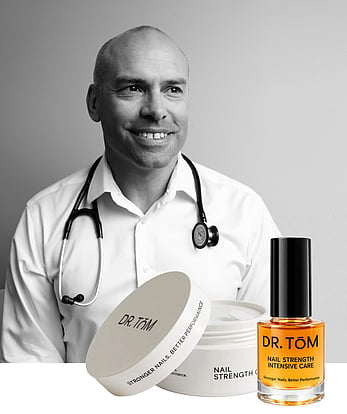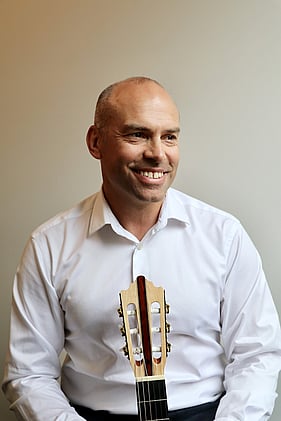
Dr Tom Nailcare began with a broken fingernail.
For many people, a broken nail is a minor annoyance. For Christchurch doctor and classical guitarist Dr Tom Cawood, it could mean being unable to practise or perform properly for several weeks.
Classical guitarists use the natural fingernails of their plucking hand to produce their sound. The nails need to be strong enough to withstand everyday knocks, while retaining enough flexibility to avoid becoming brittle and cracking.
Tom’s nails regularly broke after catching on ordinary things such as pockets, bags, door handles and laundry baskets. He tried many of the nail strengthening products already available, including nourishing treatments, nail varnishes, acrylics and artificial nails.
Some provided temporary protection, but Tom found that coatings, glues and the solvents required to remove them could leave his natural nails in worse condition.
As a hospital doctor with a first-class honours science degree and a PhD in laboratory science, Tom decided to approach the problem differently.
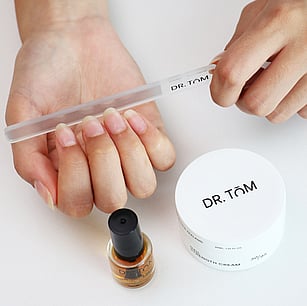
Developing a way to test nail strength
One of the first challenges was that there was no widely accepted laboratory method for comparing the performance of nail strengthening products.
Human fingernails vary considerably in size, thickness and condition, making it difficult to conduct consistent laboratory testing. Consumer feedback can be useful, but it is also subjective.
With support from a local university and a Research and Development Grant from Callaghan Innovation, Tom worked with New Zealand researchers to help develop a novel testing system.
Fingernails and sheep’s wool are both made primarily from keratin. Using keratin derived from wool, the research team produced standardised nail-like test plates with a thickness similar to a human fingernail.
The test nails could then be treated with different formulations, exposed to washing and drying cycles, and tested using specialised equipment to measure their strength, flexibility and the amount of energy required to break them.
This created a more consistent way to compare formulations before asking people to try them.
Harnessing New Zealand wool science
Through repeated testing and development, the team created a nail strengthening cream containing moisturising ingredients, plant-derived oils, vitamins and hydrolysed keratin derived from New Zealand sheep’s wool.
The moisturising ingredients help the nail retain flexibility, while the hydrolysed keratin is intended to interact with the keratin fibres already present within the nail.
Independent laboratory testing by Lincoln Agritech found that the formulations improved the tensile properties of the model nail plates. The most consistent result was an improvement of between 22.2% and 30.7% in absorbed energy - the total amount of work required to break the test nail.
For Tom, this was an important result. The product had not simply been developed around a marketing claim - it had been refined through a repeatable testing process.
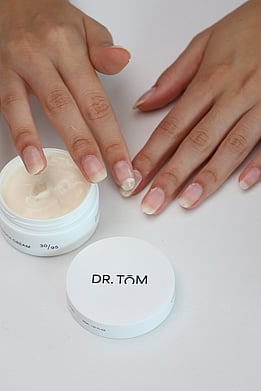
Putting the cream into people’s hands
Laboratory results were only the first step. The cream was then provided to 40 volunteers, including classical guitarists, hairdressing clients, teachers and other people seeking stronger natural nails.
The participants ranged in age from 15 to 78.
The consumer preference testing found that:
100% considered the cream easy or very easy to apply
98% found the texture pleasant or very pleasant
93% considered the cream effective or very effective
93% were satisfied or very satisfied
89% said they would probably or definitely recommend it
95% of the participating guitarists found it effective or very effective
Participants reported improvements in nail strength, smoothness, hydration, appearance and flexibility.
One Christchurch hairdresser said that, after 25 years of struggling with weak nails caused by constant exposure to water, her nails were finally strong enough to grow. Other customers have described improvements after damage from gels and acrylic nails, fewer breaks during gardening and everyday activities, and stronger nails for playing classical guitar.
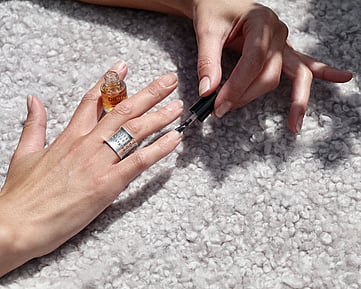
From a personal frustration to a growing New Zealand brand
What began as one guitarist’s attempt to solve his own problem has grown into Dr Tom Nailcare - a Christchurch-based nailcare company focused on strengthening and supporting natural nails.
The products do not rely on nail varnish, glue, gels, acrylics or artificial coatings. Instead, they are designed to absorb into and support the existing nail, without needing to be stripped or removed with solvents.
Although the range was originally inspired by classical guitar, its customers now include healthcare workers who regularly wash and sanitise their hands, hairdressers exposed to water and chemicals, gardeners, musicians and people trying to restore their natural nails after wearing gels or acrylics.
Building a responsible New Zealand business
Dr Tom Nailcare is also working to minimise its environmental impact as it grows.
The brand sources local ingredients where practical, including hydrolysed keratin derived from New Zealand wool. It uses recyclable pots and glass bottles, keeps additional packaging to a minimum and uses paper-based and biodegradable packing materials where possible.
Future goals include measuring the company’s carbon footprint, developing a refill programme for its liquid treatment and supporting environmental research focused on restoring New Zealand rivers.
For Tom, the aim is not simply to sell another cosmetic product. It is to build a New Zealand company grounded in performance, science, continual improvement and kindness to people and the environment.
And, importantly, he can now practise his guitar without waiting weeks for another broken nail to grow back.
https://drtomnailcare.com/